Electrified Vintage Broncos: Torque on the Trail
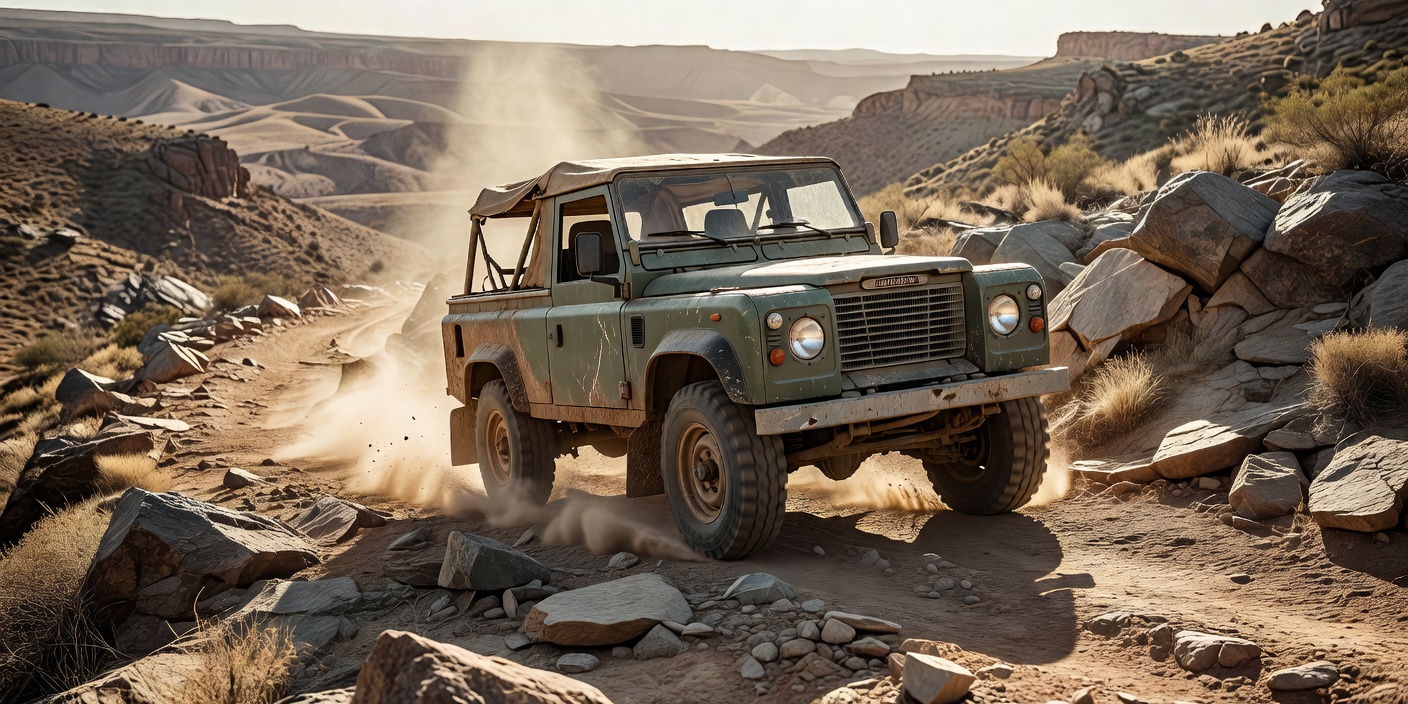
The first-generation Ford Bronco (1966–1977) has seen an explosion in popularity as a premium restomod platform. Its boxy aesthetics, ladder-frame construction, and cultural cachet make it an ideal candidate for electrification. Converting a classic 4x4 presents entirely different engineering challenges compared to a sports car, primarily revolving around ground clearance, drivetrain stress, and packaging within a body-on-frame architecture.
Battery Packaging in a Ladder Frame
Unlike unibody vehicles where battery modules must be carefully shoehorned into existing voids, a ladder-frame chassis offers distinct advantages. The space between the robust steel frame rails is inherently protected and structurally sound. Engineers frequently utilize custom-fabricated belly pans that house the battery modules securely between the rails.
This central, low-slung placement has a transformative effect on the Bronco's center of gravity. Vintage 4x4s are notoriously top-heavy; by anchoring a significant portion of the vehicle's mass beneath the floorboards, lateral stability on off-road trails and on-road cornering behavior is vastly improved.
Drivetrain: Direct Drive vs. Transfer Cases
A critical decision in a 4x4 EV conversion is how to route power to the wheels. There are two prevailing methodologies in the industry:
- Mating to original hardware: The electric motor is adapted to bolt directly to a manual transmission or a modern heavy-duty automatic, retaining the traditional two-speed transfer case (High/Low range). This preserves the mechanical feel and allows for extreme gear reduction for rock crawling.
- Direct-drive to a transfer case: Bypassing the transmission entirely. Because electric motors have a broad torque band and spin up to 12,000+ RPM, a transmission is largely unnecessary. The motor connects straight to an upgraded transfer case, sending power to the solid axles.
Handling the Torque
Vintage Dana 30 and Ford 9-inch axles were designed for the modest output of carbureted V8s. An electric powertrain can instantly deliver double or triple the torque. The consensus among premium builders is that axle upgrades are mandatory. Chromoly axle shafts, upgraded splines, and heavy-duty differentials are essential to prevent snapping components when a tire suddenly gains traction on a rock face.
The Silent Off-Road Experience
Perhaps the most profound change is the auditory experience. Navigating a technical trail in complete silence allows the driver to hear tire slip, suspension articulation, and the natural environment. The granular throttle control of an electric motor means power can be metered out in single RPM increments, providing a level of traction management that internal combustion engines simply cannot match.